Short term rental insurance in Australia for Airbnb hosts

Before you list your property on Airbnb, check that your insurance accepts paying guests. Standard home policies can exclude short-term rentals, even when you only host occasionally. The Insurance Council of Australia recommends checking your cover before advertising.
Then check what happens if a guest damages your furniture, someone is injured, or repairs interrupt your bookings. These are separate coverage questions. Choosing insurance for a holiday rental means understanding which costs the policy would pay and which you would need to meet yourself.
This guide provides general information for Australian property owners. Your insurer or licensed insurance broker can assess cover for your property.
What is short term rental insurance
Short-term rental insurance is cover designed or accepted for a property that accommodates paying guests for temporary stays. It may be sold as holiday rental insurance, short-stay insurance or landlord insurance for short-term rentals. The policy wording determines which losses are covered.
Check the building, your furniture and contents, guest damage, legal liability and rental income separately. Acceptance of holiday letting does not mean every one of these is included.
The permitted length of a stay also matters. For example, EBM RentCover ShortTerm is designed for properties rented for less than six months at a time. Tell the provider if you combine weekend bookings with longer stays.
Does normal home or landlord insurance cover Airbnb
A home or landlord policy may cover Airbnb hosting if the insurer accepts your rental use. Check your particular policy before taking bookings. The product name alone will not tell you whether paying guests, their damage or the periods between stays are covered.
Explain whether you rent a room or the whole home, how long guests stay and whether you also live there. Include every booking channel you use. Ask the insurer to confirm the accepted arrangement in writing.
A message to send your insurer
Adapt this to your property and include any other information the insurer requests:
I plan to rent [a room / the whole property] at [address] to paying guests through [booking channels]. Typical stays will last [duration]. I will also use the home for [personal stays, if any], with [expected empty periods] between bookings. Does my policy accept this use? Please confirm the cover and exclusions for guest damage and theft, liability to guests, and lost rent after an insured event. What conditions, limits and excesses would apply?
Keep the reply with your policy documents. If the insurer proposes a change, request the updated schedule and wording.
Airbnb insurance in Australia and AirCover
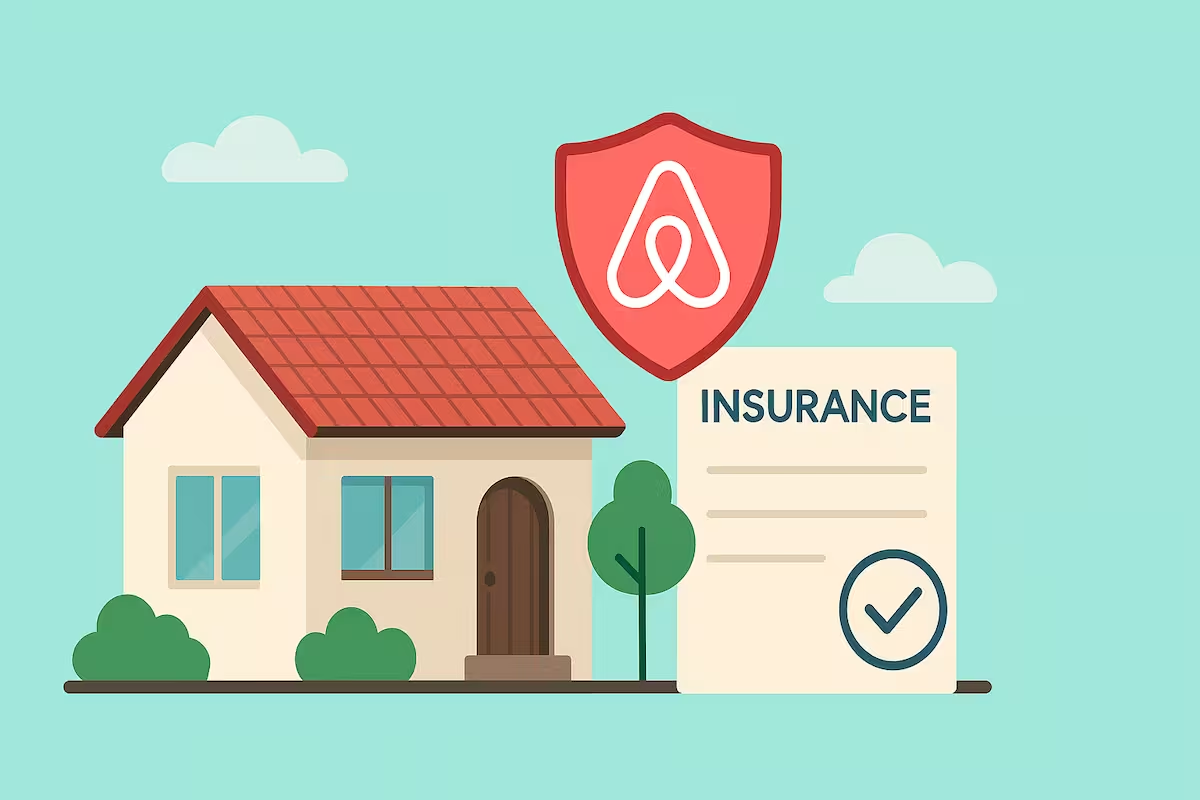
Airbnb’s AirCover for Hosts includes damage protection and liability insurance. Airbnb says AirCover does not replace your own insurance. Australian hosts should check their property policy alongside the platform’s protection, especially when they take bookings through other channels. Airbnb AirCover guidance.
The two components cover different types of loss:
Host damage protection
Can reimburse certain guest-caused damage when the guest does not pay, up to US$3 million, subject to its terms.
Key limitation: It is a contractual protection programme, not an insurance policy.
Host liability insurance
Provides up to US$1 million for certain legal liabilities arising during an Airbnb stay.
Key limitation: It is insurance, with eligibility requirements and exclusions.
Sources: Airbnb Host damage protection, Host Damage Protection Terms and Host liability insurance. The amounts above are in US dollars.
Damage protection excludes normal wear and tear and ordinary checkout cleaning. A guest injury is a different issue, considered under the liability programme rather than damage protection. Airbnb damage protection guidance.
Airbnb’s liability programme applies to eligible Airbnb stays. If you also accept Stayz, Booking.com or direct reservations, confirm cover for those bookings with your insurer. Airbnb liability programme summary.
For more detail on the platform’s protection, see our AirCover for Hosts in Australia guide.
How to compare holiday rental insurance
Compare policies against how you actually use the property. Give each provider the same details and request quotes for the same sums insured and excesses. Read the Product Disclosure Statement (PDS), policy schedule and any special conditions together.
Use the questions below to record what each quote includes, excludes or leaves unanswered:
- Building and contents: Which parts of the property and which furnishings are insured? Is building cover included or optional?
- Guest damage: Are accidental, malicious and intentional damage by paying guests covered? What limits and excesses apply?
- Theft: Is theft by a guest covered, including where there is no forced entry?
- Legal liability: Does cover apply to injuries involving paying guests and damage to other people’s property?
- Loss of rent: Which insured events trigger cover? Are confirmed bookings required, and what time or payment limits apply?
- Booking channels: Are Airbnb, Stayz, Booking.com, agent bookings and direct bookings all accepted?
- Owner stays and vacancy: What cover applies when you use the property yourself or it is empty between guests?
- Excesses and sublimits: Could separate incidents attract separate excesses? Are valuable items subject to individual caps?
- Property conditions: What inspections, security measures and notifications does the policy require?
Ask the provider to point you to the wording behind each answer. For examples of how cover differs, see EBM’s cover, limits and excesses, BJS’s policy information and Youi’s inclusions and exclusions.
For building cover, use the cost of rebuilding rather than the property’s purchase price. For contents, consider what it would cost to replace the furnishings you supply. Moneysmart explains building sums insured and policy comparisons.
Australian short term rental insurance options to compare
These three examples show why guest-damage cover deserves its own check. They illustrate product differences; they are not a ranking or a complete market comparison.
EBM RentCover ShortTerm
Designed for holiday homes, Airbnb accommodation and other rentals of less than six months. Advertises accidental guest-damage cover and optional building insurance.
What to clarify in a quote: Confirm the insured property, contents limits, building selection and excesses for separate damage events.
BJS holiday rental insurance
BJS can arrange cover for short-term accommodation, including building and contents, specified tenant damage and liability.
What to clarify in a quote: Request the policy wording and schedule for the specific quote, including loss-of-rent cover and limits.
Youi holiday rental insurance
Offers landlord cover for holiday rentals, including specified insured events and legal liability. Its FAQ excludes damage caused by short-term tenants.
What to clarify in a quote: Check how that exclusion affects your needs, together with the building and contents selected.
If you use a broker, ask which insurer underwrites the policy and which wording applies to your quote. Check the quoted cover against the worksheet before choosing.
How much does short term rental insurance cost
You will need a property-specific quote to know the cost. Compare prices using the same insured amounts and excesses, and check that each policy accepts your rental arrangements. Have these details ready:
- The address, property type and relevant building features.
- Whether you rent a room or the whole property, and whether you also live or holiday there.
- The usual stay length, booking channels and expected periods without guests.
- Your building and contents sums insured.
- The cover you want for guest damage, liability and rental income.
- The claims history and other information requested in the application.
Compare the premium alongside the excess, which is the amount you contribute to a claim, and any payout limits or exclusions. A cheaper premium may leave more of a loss for you to pay. Moneysmart’s comparison guidance explains what to check.
Include the quoted premium in your annual property budget, and keep a separate allowance for maintenance and costs you would pay yourself.
Insurance for apartments and homes you also use
For an apartment, start by asking the owners corporation or body corporate what the strata policy insures. It may cover the building while leaving your furniture and other contents to you. Moneysmart explains the distinction.
Then ask your insurer how the policy responds to your hosting activities, including guest damage and liability. Confirm the permitted use of the apartment with the relevant strata rules.
For a home you also use yourself, tell the insurer when guests will stay, when you will stay and when it will be empty. Ask how cover changes across those periods.
Is holiday rental insurance legally required
Requirements depend on where the property is located and how it operates.
In New South Wales, a short-term rental host must hold insurance covering liability for third-party injuries and death on the premises, valid for the occupancy period. NSW Government guidance also tells hosts to review exclusions when checking whether their policy meets that obligation. NSW host insurance obligations.
Check the rules for your own location and have your insurer or broker confirm the relevant cover. The NSW requirement does not set one nationwide rule or universal dollar limit. Planning, registration, safety and strata requirements also need separate attention.
What to do if a guest causes damage
Have an incident process ready before your first booking. If you use a property manager, agree who will inspect the property, collect evidence and report problems:
- Make the property safe. Arrange urgent help where needed and take reasonable steps to prevent further damage.
- Record what happened. Keep dated photographs, the booking details, messages, an inventory of affected items and any repair estimates.
- Contact the relevant insurer or platform promptly. Check its reporting and evidence deadlines.
- Preserve the evidence. Ask what must be retained before disposing of damaged items or arranging non-urgent repairs.
- Track the claim. Keep correspondence, invoices, requested documents and any payments together.
For Airbnb damage requests, file in the Resolution Centre within 14 days of the guest’s checkout. Airbnb’s help article gives a separate 14-day limit from the damage or loss for involving Support and supplying documents; its terms describe a different evidence deadline. Act promptly and confirm the deadlines for your request. See Airbnb’s reimbursement guidance and terms, section 3.
Notify your own insurer as required by your policy, even if you are also contacting a booking platform. Explain any other claim or reimbursement relating to the same incident.
Frequently asked questions
Do I need insurance if I only host occasionally
Check cover even for occasional hosting. A few paid stays can still fall outside a policy’s accepted use. Explain your plans before advertising and ask whether cover applies while guests are there. Insurance Council guidance.
Does landlord insurance for short term rentals cover guest damage
Guest-damage cover varies by policy. Check accidental damage, malicious damage and theft individually, including their limits and excesses. For example, EBM advertises accidental guest-damage cover, while Youi excludes damage caused by short-term tenants.
Will holiday rental insurance cover lost bookings
Loss-of-rent cover depends on an insured trigger. BJS describes cover for existing bookings that cannot go ahead when an insured event makes the building untenantable. Ask which income is covered and for how long. Ordinary vacant nights and guest cancellations should not be assumed to qualify.
Does Airbnb insurance cover Booking.com or direct bookings
Airbnb’s host liability insurance applies to eligible Airbnb stays. It does not extend that protection to a Booking.com or direct reservation simply because you also list on Airbnb. Confirm those channels under your own policy. Airbnb liability programme summary.
What is the best short term rental insurance in Australia
There is no single best policy for every host. Start with your property type, rental arrangements and the losses you want covered. Then compare guest damage, liability, building and contents, loss of rent, exclusions and excesses. A licensed insurance broker can help explain differences between quotes.
Check what your property could earn after hosting costs
Include your insurance quote when assessing the return from short-term renting. Allow for maintenance, cleaning, management fees and the excesses you might need to pay.
MadeComfy’s Airbnb management service can help with day-to-day hosting. Start with an online income estimate, then request a property appraisal for a closer look at seasonal income, fees and the assumptions behind your forecast. Bring your insurance quote into that cost discussion.
Get your free rental income estimate. Enter your property address and email to get started. The estimate is indicative; a property appraisal lets you review the numbers in more detail.